
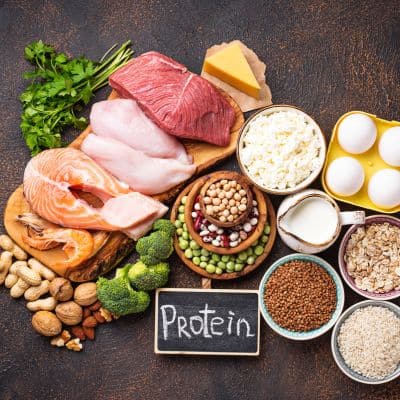
The protein advice you read online is wildly inconsistent. Some sources say 0.36 grams per pound of body weight is plenty. Others say to double or triple that on keto or any low-carb diet. The right answer depends on what you are using the protein for: maintaining lean mass, recovering from training, losing weight without losing muscle, or just feeling full enough to stick with the diet.
The Three Ranges That Actually Matter
| Goal | Grams per pound of body weight | Example for a 160-lb adult |
|---|---|---|
| Sedentary maintenance | 0.45 to 0.55 | 72 to 88 g per day |
| Active or weight-loss preservation | 0.7 to 0.9 | 112 to 144 g per day |
| Building or rebuilding muscle | 0.9 to 1.1 | 144 to 176 g per day |
If you are cutting carbs and want to keep the muscle you have, the middle row is where most low-carb adults should live. Going under that range is the single biggest reason people on keto “lose weight” but feel weak, look softer, and rebound when they go off the diet. The lost weight was lean tissue, not fat.
Why Low-Carb Diets Need More Protein, Not Less
When you cut carbs significantly, your body shifts toward using fat and amino acids for energy. If protein intake is low, the body will pull from muscle to make glucose through a process called gluconeogenesis. Slightly higher protein intake spares muscle and keeps satiety hormones elevated. That is why people who report being “always hungry on keto” almost always turn out to be under-eating protein, not over-eating carbs.
Three Practical Ways to Hit Your Daily Target
1. Anchor Each Meal at 30 Grams
The body uses protein in 25 to 40 gram chunks at a time. Eating 100 grams in one sitting and skipping the rest of the day is less effective than three meals of 30 to 35 grams each. Plan each meal to hit roughly that floor: a four-ounce chicken breast, a three-egg scramble with cheese, or a Greek yogurt and seed bowl.
2. Use a Targeted Snack to Close the Gap
If you finish dinner at 90 grams and your target is 120, a single Fluffy Nutter Protein Bar closes the gap by 15 to 20 grams without breaking your carb count. This is what protein-focused snacks are actually for: they exist to backfill a daily target, not to replace meals.
3. Cover the Micronutrient Side
Higher protein intake increases your need for B vitamins, magnesium, and zinc. If you are cutting carbs and pushing protein at the same time, a daily multivitamin like the Blissful Wellness Elite Multi Vitamin covers the gaps that an all-meat-and-vegetables diet sometimes leaves, especially in the first few weeks before your eating pattern stabilizes.
How to Track Without Becoming Obsessive
You do not need to weigh every chicken breast for the rest of your life. Track honestly for two weeks, learn what 30 grams of protein looks like on your plate, and then eyeball it. Most people are off by 30 to 50 grams a day until they have actually measured a few times. After two weeks, the visual memory does the work.
Frequently Asked Questions
Can you eat too much protein on a low-carb diet?
For most healthy adults, going over the recommended target is not harmful, just unnecessary. Excess protein gets converted to glucose or stored as fat. The practical ceiling is whatever you can comfortably eat without nausea or hitting your calorie target too early.
Does protein kick you out of ketosis?
Only if you are eating very large amounts at once and your body converts the excess to glucose. For most people eating 25 to 40 grams of protein per meal, gluconeogenesis is too slow to disrupt ketosis.
What if I am vegetarian on low-carb?
Lean on eggs, full-fat dairy, tofu, tempeh, and high-protein supplements. Hitting 100-plus grams per day is harder without meat, but it is doable with two protein-forward meals plus targeted snacks.
How do I know if I am getting enough?
Two simple signals: your hunger feels managed throughout the day, and your strength stays stable or improves over four weeks. If both are true, you are in range.