

Key Takeaways
- Net carbs = total carbs − fiber − sugar alcohols (erythritol, stevia, monk fruit only).
- Subtract erythritol and stevia fully; subtract xylitol/sorbitol by half; never subtract maltitol — it spikes blood sugar.
- Targets: 20–30g/day for keto, 50–100g/day for moderate low carb, 100–150g for maintenance.
- Always calculate net carbs yourself from the label — front-of-package “net carb” claims are often wrong.
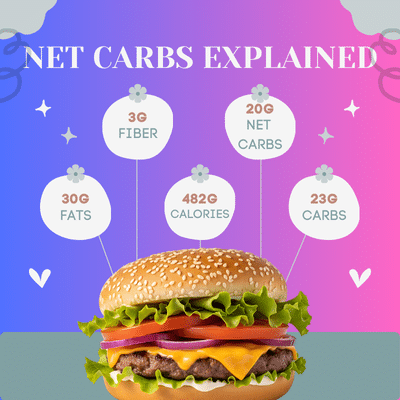
Net carbs are the carbohydrates your body actually digests and converts to blood sugar — calculated as total carbs minus fiber minus certain sugar alcohols. They matter because they’re what actually affects your blood sugar, insulin, and weight loss, and they’re the number every low carb and keto plan is built on.
Here’s how to calculate them, which sweeteners you can and can’t subtract, and how many to eat per day — in plain language, no nutrition degree required.
What Are Net Carbs?
Net carbs are the digestible portion of a food’s carbohydrates. Fiber is technically a carb, but your body can’t break it down — it passes through and supports gut health instead of raising blood sugar. Certain zero-glycemic sweeteners behave the same way. So both get subtracted from the total:
Net Carbs = Total Carbs − Fiber − Sugar Alcohols (erythritol, stevia, monk fruit)
How Do You Calculate Net Carbs? (Worked Example)
Take a typical low carb protein bar label and subtract in two steps:
| Label Line | Amount | Counts Toward Net Carbs? |
|---|---|---|
| Total carbohydrates | 20g | Starting number |
| Dietary fiber | 10g | No — subtract |
| Sugar alcohols (erythritol) | 5g | No — subtract |
| Net carbs | 5g | 20 − 10 − 5 = 5g |
Despite “20g total carbs” on the label, this bar costs only 5g against your daily budget — perfectly keto-friendly.
Which Sugar Alcohols Can You Subtract?
Only the zero-glycemic ones. This is where most people get burned:
| Sweetener | Glycemic Index | Subtract? |
|---|---|---|
| Erythritol | 0 | Yes — fully |
| Stevia | 0 | Yes — fully |
| Monk fruit | 0 | Yes — fully |
| Xylitol | 13 | Partially — count about half |
| Sorbitol | 9 | Partially — count about half |
| Maltitol | 35 | No — count it as a regular carb |
At Low Carb Cabana we prioritize products sweetened with erythritol and stevia, so the net carb counts you see are counts you can trust.
Why Do Net Carbs Matter More Than Total Carbs?
Because counting total carbs makes healthy, high-fiber foods look worse than they are. An avocado has 12g total carbs but only 2g net; chia seeds are the same; an ounce of almonds is 2.5g net. All three are packed with fats, vitamins, and minerals — you’d skip them on a total-carb count and be worse off for it. Net carbs give you an accurate picture of what a food actually does to your blood sugar.
How Many Net Carbs Should You Eat Per Day?
It depends on your goal. Most people lose weight steadily anywhere under 100g; ketosis requires under about 30g:
| Approach | Net Carbs / Day | Best For |
|---|---|---|
| Strict keto | 20–30g | Ketosis, fastest fat burning, appetite suppression |
| Moderate low carb | 50–100g | Sustainable long-term weight loss with more food variety |
| Maintenance | 100–150g | Holding a goal weight after you’ve reached it |
New to this? Start at 75–100g. You can always tighten later — going too strict on day one is the fastest way to quit by day ten.
What Are the Net Carbs in Common Foods?
| Food | Serving | Net Carbs |
|---|---|---|
| Meat, poultry, fish, eggs, most cheese | Any | ~0g |
| Spinach | 1 cup | 1g |
| Cauliflower | 1 cup | 3g |
| Broccoli | 1 cup | 4g |
| Almonds | 1 oz | 2.5g |
| Chia seeds | 1 oz | 2g |
| Avocado | 1 whole | 2g |
| Strawberries | 1 cup | 8g |
| Blueberries | 1 cup | 17g |
| Banana | 1 medium | 24g (skip on keto) |
| Low carb protein bars | 1 bar | 2–5g |
| Low carb pasta | 1 serving | 5–7g |
| Protein shakes | 1 serving | 1–3g |
What Are the Most Common Net Carb Mistakes?
Four mistakes account for most stalled progress: trusting front-of-package “net carb” claims instead of doing the label math yourself; forgetting hidden carbs in sauces and dressings (ketchup and BBQ sauce run 5–10g of sugar per serving); treating “low carb” junk food as unlimited; and eyeballing portions instead of tracking. Use an app like Carb Manager, MyFitnessPal, or Cronometer for your first month — after that, accurate estimates become second nature.
Need More Support?
If you want personalized guidance, Dr. Blissenbach offers a medically supervised weight loss program that combines low carb nutrition with medical oversight and, where appropriate, prescription GLP-1 medications.
Frequently Asked Questions
What is the formula for net carbs?
Net carbs = total carbohydrates − fiber − certain sugar alcohols (erythritol, allulose). Fiber and these sweeteners pass through your body without meaningfully raising blood sugar, so they don’t count toward your daily carb budget.
Does fiber really not count as a carb?
Correct — your body can’t digest fiber, so it doesn’t raise blood sugar or insulin. That’s why an avocado with 12g total carbs but 10g fiber only “costs” 2g net carbs.
Do sugar alcohols kick you out of ketosis?
Erythritol, stevia, and monk fruit don’t — they have essentially zero glycemic impact and can be fully subtracted. Maltitol does: with a glycemic index of about 35, it raises blood sugar and should be counted as a regular carb.
How many net carbs should I eat per day to lose weight?
For ketosis, 20–30g net carbs per day. For moderate low carb weight loss, 50–100g per day. If you’re new, start at 75–100g and reduce from there if you want faster results.
Should diabetics count net carbs or total carbs?
Net carbs are generally the more accurate measure of blood sugar impact, but the safest approach for diabetics is to verify with a glucose meter: test before eating and 1–2 hours after. If a food raises your blood sugar more than 30–40 mg/dL, its label math doesn’t matter — limit it. Always coordinate dietary changes with your healthcare provider, especially if you take diabetes medication.
Once you master net carbs, low carb eating stops being guesswork. And with the right products — protein bars, shakes, and snacks with honest counts — you’ll never feel deprived. Shop our full selection of low net carb products.