Key Takeaways
- Post-bariatric eating advances through 5 stages: clear liquids → full liquids → pureed → soft foods → regular texture, over roughly 6–8 weeks.
- Protein comes first at every stage — most programs target 60–80g/day, largely from shakes and drinks early on.
- No drinking within ~30 minutes of meals, no sugary or carbonated drinks, tiny bites, thorough chewing.
- Your surgical team’s protocol always overrides any general guide — timelines vary by procedure and program.
After bariatric surgery, food comes back in five stages: clear liquids in the first days, full liquids for the first week or two, pureed foods through roughly week four, soft foods through week six, and then regular-texture eating — protein first, portions small, sugar out. The exact timeline belongs to your surgical team, and their protocol overrides any general guide, but the progression below is the standard shape most programs follow.
What Are the Five Stages of Post-Bariatric Eating?
| Stage | Typical Timing* | What You Eat | The Goal |
|---|---|---|---|
| 1. Clear liquids | First days after surgery | Water, broth, sugar-free gelatin, decaf tea — sipped slowly | Hydration while the stomach begins healing |
| 2. Full liquids | ~Weeks 1–2 | Protein shakes and high-protein drinks, strained cream soups, sugar-free pudding | Hit protein targets in liquid form |
| 3. Pureed | ~Weeks 2–4 | Blended lean proteins, scrambled eggs, cottage cheese, Greek yogurt (unsweetened) | Reintroduce texture without strain |
| 4. Soft foods | ~Weeks 4–6 | Flaky fish, ground poultry, soft-cooked vegetables, canned tuna | Transition toward normal eating |
| 5. Regular texture | ~Weeks 6–8+ | Protein-first plates in small portions; new foods one at a time | Lifelong bariatric eating pattern |
*Timing varies by procedure (sleeve, bypass, band) and by program — always follow your surgical team’s schedule.
Why Does Protein Come First?
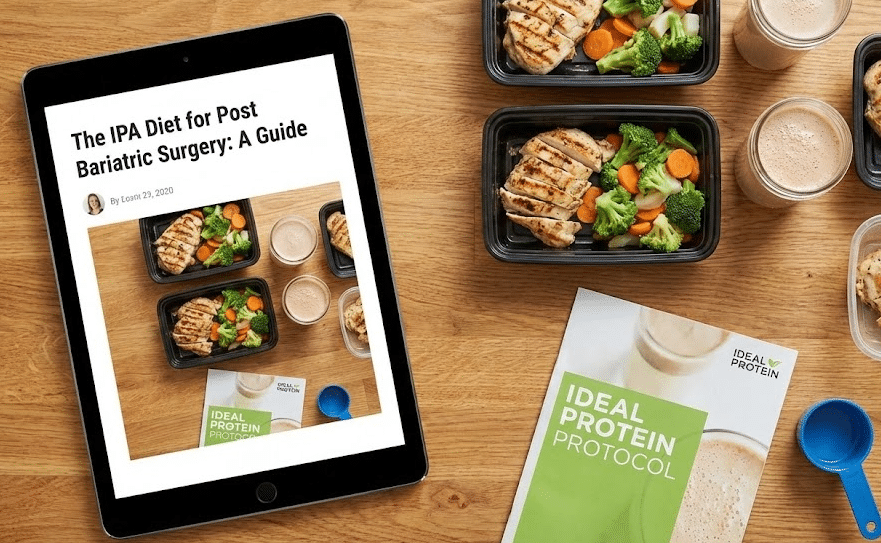
Because your new stomach holds only a few ounces, and protein is what protects muscle, drives healing, and keeps you satisfied while your body loses weight rapidly. Most programs target 60–80 grams per day — a number that’s nearly impossible to hit from solid food alone when a meal is four bites. That’s why liquid protein carries the early stages: a 70-calorie, 15g-protein drink delivers a quarter of a day’s target in a format a healing stomach handles easily. The high-protein approach many programs use is covered in our IPA diet after bariatric surgery guide.
What Are the Non-Negotiable Rules at Every Stage?
- Don’t drink with meals. Stop fluids ~30 minutes before eating and resume ~30 minutes after — liquid fills the pouch and crowds out protein.
- No sugar. Sugary food and drink can trigger dumping syndrome (nausea, cramping, dizziness), especially after bypass. This is why bariatric eating is naturally low carb.
- No carbonation. Gas stretches the pouch and causes discomfort.
- Tiny bites, thorough chewing, slow meals. Twenty to thirty minutes per meal; stop at the first sign of fullness.
- Sip fluids all day. Target ~64 oz to avoid dehydration — the most common post-surgery readmission cause.
- Take your vitamins. Lifelong supplementation per your team’s protocol — absorption changes permanently after surgery.
What Should Your Pantry Look Like Before Surgery Day?
Stock the first month before you’re discharged, because shopping on day three post-op is miserable. The short list: high-protein drinks and shakes in several flavors (taste preferences change after surgery — variety prevents protein fatigue), sugar-free gelatin and pudding, broths, and — for the soft-food stage onward — bariatric-friendly high-protein snacks like low carb protein bars. Our bariatric nutrition collection gathers all of it in one place.
What Does Eating Look Like Long Term?
The lifelong pattern is simple: protein first on every plate, vegetables second, carbs last and minimal; three small meals plus one or two planned protein snacks; fluids between (not during) meals; and sugar permanently retired. Most patients settle into what is functionally a high-protein low carb diet — which is why the tools on this site serve bariatric patients so well years after surgery, not just in recovery.
Frequently Asked Questions
How much protein do you need after bariatric surgery?
Most surgical programs target 60–80 grams of protein per day, prioritized before anything else on the plate. In the early liquid and pureed stages, protein drinks and shakes do most of the work because stomach capacity is measured in ounces.
Why can’t you drink liquids with meals after bariatric surgery?
Your new stomach pouch is small. Liquid taken with food fills it instantly, crowds out protein, and can flush food through too quickly. Standard guidance is to stop drinking about 30 minutes before meals and wait about 30 minutes after.
What is dumping syndrome?
A reaction — nausea, cramping, sweating, dizziness, diarrhea — that occurs when sugar moves too quickly from the stomach pouch into the small intestine, most common after gastric bypass. Avoiding sugary foods and drinks is the primary prevention, which is why bariatric eating is naturally low carb.
When can you eat solid food after bariatric surgery?
Typically around weeks 4–6 for soft solids and weeks 6–8 for regular-texture food, but timelines vary by procedure and by program. Your surgical team’s schedule always overrides any general guide, including this one.
What are the best snacks after bariatric surgery?
Once your team clears solid food: protein-first options with minimal sugar — low carb protein bars, cheese, eggs, and high-protein drinks between meals. See our roundup of bariatric-friendly high-protein snacks for specific picks.
Every product mentioned is part of the curated selection at Low Carb Cabana, handpicked by Dr. Elyssa Blissenbach, a board-certified internist — with free shipping over $79. Explore the bariatric nutrition collection and stock your stages before surgery day.